Packing a nursery bag can feel surprisingly complicated at first. Parents want their child to have everything they might need, but an overfilled bag makes it harder for nursery staff to find the one clean vest or comforter they need quickly.
The ideal nursery bag contains enough clothing, personal-care items and familiar comforts for the child’s day without becoming a second suitcase. What belongs in it will depend on the child’s age, the nursery’s routines, the weather and what the setting already provides.
Before buying or packing anything, ask the nursery for its own list. Some settings provide nappies, wipes, meals and sun cream, while others expect families to bring them. There may also be rules about food, medicines, bag size and how belongings must be labelled.
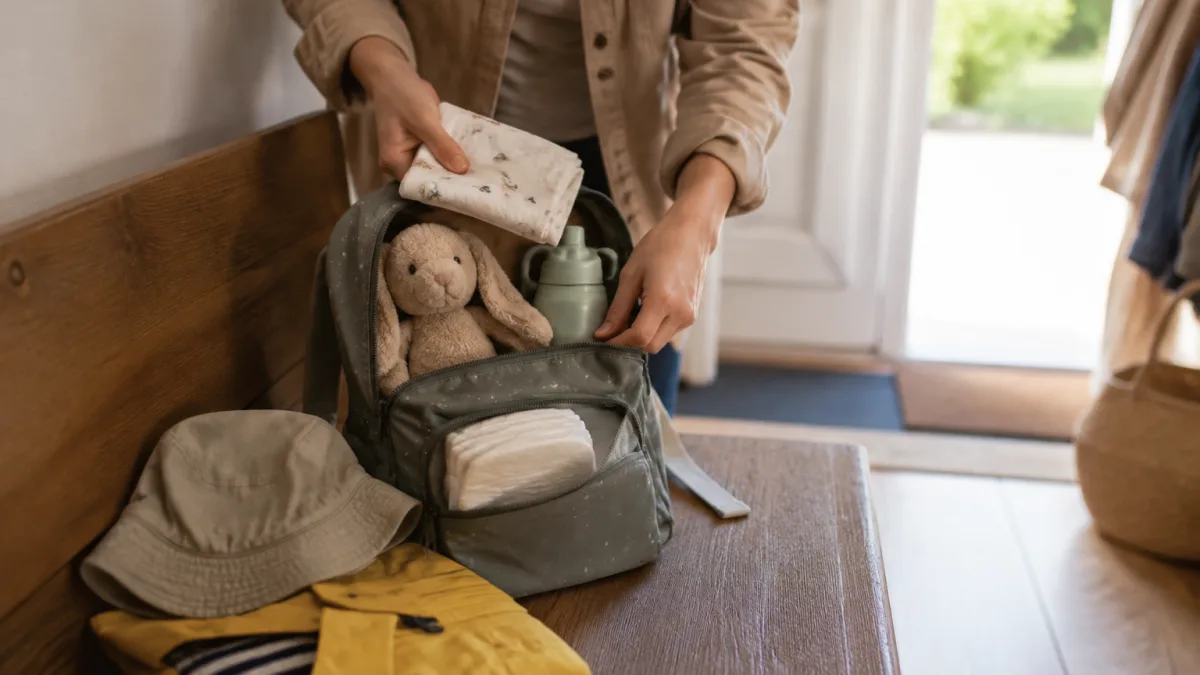
This simple checklist covers the items children commonly need, from their first settling sessions through to preschool.
Nursery bag checklist at a glance
For an ordinary nursery day, your child may need:
- A suitable, clearly named bag
- Two or three complete changes of clothes
- Extra underwear or nappies
- Wipes and nappy cream, if the nursery does not provide them
- A waterproof coat or jacket
- Weather-appropriate outdoor clothing
- Indoor shoes or slippers, if requested
- A labelled water bottle
- Food, snacks or milk only where required
- A comforter or dummy, if used
- Sleep items requested by the nursery
- Any required medicine and completed authorisation forms
- A wet bag or plastic bag for soiled clothing
This is a starting point rather than a universal list. A baby attending for ten hours will need different supplies from a four-year-old attending a three-hour preschool session.
Choose a practical nursery bag
A small backpack or compact holdall is usually suitable. It should be large enough to hold the essentials, but not so large that it takes up excessive space on a nursery peg.
Choose a bag that can be opened easily and wiped clean. Several separate compartments can be helpful, provided the arrangement does not become so complicated that staff cannot find things. Wet or dirty clothing should be kept away from bottles, comforters and clean clothes.
Ask whether the nursery has any restrictions on bags. Some settings have limited storage, while others discourage bags with long cords, decorative attachments or loose keyrings.
Put your child’s full name on the inside and outside of the bag. Several children may arrive with the same popular backpack, particularly if it came from a supermarket or major children’s retailer.
A distinctive colour or small, securely attached marker can help an older child recognise their bag. Avoid including the child’s full name prominently where it can be read by strangers while travelling.
Pack two or three complete changes of clothes
Even children who rarely need changing at home can get wet, muddy or covered in paint at nursery. Drinks spill, water trays overflow and toilet accidents happen. A child may also need fresh clothes after lunch, outdoor play or a bout of sickness.
Pack at least two complete changes for most children. Babies, children learning to use the toilet and those attending for a long day may need three or more.
A complete change normally includes:
- A vest or top
- Trousers, leggings or another comfortable bottom layer
- Underwear or a nappy
- Socks
Pack clothes that are easy to move in and simple for staff or the child to remove. Complicated buttons, tight jeans and outfits that must be completely removed for a nappy change can make everyday care more difficult.
For children developing independence, elasticated waists and easy fastenings can help them practise dressing and using the toilet. Clothes should also be suitable for paint, mud, food and energetic play.
Check the spare clothes regularly. Children grow quickly, and a pair of trousers packed three months ago may no longer fit when it is finally needed. Replace items when the season changes and after anything is sent home.
Nappies, wipes and toilet-learning supplies
Nursery arrangements for nappies vary considerably. Some include nappies and wipes in their fees, some provide wipes but not nappies, and others ask parents to supply everything.
If you need to pack nappies, ask how many the nursery recommends for the length of the session. It is sensible to include one or two more than the child normally uses in case of an unexpected delay or additional change.
You may also be asked to provide:
- Baby wipes or reusable wipes
- Nappy cream
- Nappy sacks
- A wet bag for reusable nappies
- Any liners or other parts required for your reusable-nappy system
Do not assume staff can apply a cream simply because it is in the bag. The nursery may require written permission, the original container and clear instructions. Some creams are treated as medicines under the setting’s policy.
A child who is learning to use the toilet will usually need several pairs of underwear, spare trousers and extra socks. Shoes can also become wet, so ask whether a washable spare pair should remain at nursery.
Tell staff how toilet learning is being approached at home, including the words your child uses. Nursery and home do not need to follow an identical schedule, but a consistent and calm approach can make the process easier.
Food, milk and a water bottle
Do not pack food until you know the nursery’s arrangements. Many settings provide all meals and snacks, while others ask families to bring a packed lunch. Some do not allow food from home because of allergies or food-safety procedures.
If your child needs a packed lunch, follow the nursery’s guidance closely. It may cover suitable containers, refrigeration, choking risks and foods that must not be brought into the setting.
Do not place an occasional treat or snack in the bag without telling staff. A product that appears harmless may contain an allergen that presents a serious risk to another child.
Babies may need expressed breast milk, formula or prepared bottles. Ask exactly how milk should be labelled, stored and transported. The nursery may require each bottle or container to show the child’s name, date and other information.
Never send formula, breast milk or other feeds in an unlabelled container. Staff must be able to identify what belongs to each baby without relying on memory.
Older babies and children may need a named water bottle. Choose one that your child can use and that can be cleaned thoroughly. Check it for leaks before putting it beside clean clothes.
If your child has an allergy, intolerance or medically required diet, discuss it directly with the nursery. Written care plans and prescribed emergency medicines should be agreed before attendance begins rather than simply placed in the bag.
Comforters, dummies and sleep items
A familiar comforter can help a child manage separation and settle in an unfamiliar environment. This might be a small soft toy, muslin cloth or another safe item associated with home.
Choose something that can be washed and, if possible, replaced. A unique and irreplaceable comforter can create considerable distress if it is lost. Some families keep an identical spare, although children occasionally notice even very small differences.
Tell staff what the item is called and when your child normally uses it. Some children want their comforter throughout the day, while others need it mainly during drop-off or sleep.
If your child uses a dummy, pack it in a clean, labelled container. Sending a spare can be helpful. Explain when it is normally offered rather than expecting staff to guess.
Sleep arrangements are set by the nursery’s safety procedures. Ask before packing a blanket, pillow, sleeping bag or other sleep product. The setting may provide its own bedding and may not use items brought from home.
Parents can learn more about making the transition manageable in our practical first-month nursery guide. If separation is particularly difficult, our guide on what to do when a child cries at nursery drop-off may also help.
Outdoor clothing for changing weather
Many nurseries use their outdoor spaces throughout the year. Children may go outside in light rain, cold weather or shortly after the ground has become muddy.
In cooler or wetter weather, your child may need:
- A waterproof coat
- Waterproof trousers or an all-in-one suit
- Wellington boots
- A warm hat
- Gloves or mittens
- Additional warm layers
In warmer weather, the setting may ask for:
- A sun hat that shades the face and neck
- Light, comfortable clothing
- A suitable water bottle
- Sun cream, if it is not supplied by the nursery
Ask about the nursery’s sun-protection procedure. Some settings provide one product for all children with parental permission. Others require a named bottle from home or expect parents to apply a long-lasting product before arrival.
Do not leave last season’s sun cream in the bag indefinitely. Check the expiry information and the period for which it can be used after opening.
Sandals and open-toed shoes may not be suitable for all nursery activities. Well-fitting, closed shoes usually offer better protection for running, climbing and outdoor exploration. Follow the setting’s footwear guidance.
Medicines and health information
Never place medicine in a child’s nursery bag without handing it directly to an authorised member of staff. A child could reach it, or staff might not know that it is present.
Nurseries normally require medicine to be supplied in its original packaging with the dispensing label intact where applicable. Parents must usually complete a written consent or administration form.
The setting’s policy may distinguish between prescribed medicines, non-prescription products and emergency medication. It may not be able to administer every product a parent would use at home.
If your child needs an inhaler, adrenaline auto-injector or another emergency medicine, agree the arrangements before the first session. Check:
- Where the medicine will be kept
- Who is trained to administer it
- Whether more than one device is required
- How expiry dates are monitored
- What happens during outings
- When the nursery will contact you or call emergency services
Tell the nursery about changes in your child’s health, even if no new item needs to be packed. Staff need to know about recent illness, allergies, skin conditions or anything that may affect the child’s day.
A familiar lip balm, cream or herbal product may still require permission under the nursery’s policy. Hand it to staff and ask rather than leaving it in an accessible pocket.
Label everything that goes to nursery
Nurseries contain many similar cups, coats, cardigans and comforters. Labelling items reduces confusion and makes it more likely that belongings will come home.
Add your child’s name to:
- The bag
- Every item of spare clothing
- Coats and waterproofs
- Hats, gloves and shoes
- Water bottles and lunch containers
- Bottles and milk containers
- Comforters and dummy cases
- Sun cream and personal-care products
Labels should remain readable after washing. Iron-on, stick-on and stamp labels can all work, but test them before relying on them. A handwritten permanent marker is often sufficient on care labels and containers.
Labelling both shoes is worthwhile. It is easy for two similar pairs of small black shoes or colourful wellington boots to become mixed.
Avoid attaching anything sharp or detachable to clothing. Decorative pins, loose tags and small charms can present a safety risk.
What should stay out of the nursery bag?
A nursery bag should not become a place for valuables or unnecessary toys. Items can be damaged, misplaced or shared between curious children.
Unless the nursery has specifically requested them, leave out:
- Money
- Jewellery and valuable accessories
- Electronic devices
- Small toys that could present a choking risk
- Sweets, chewing gum or unapproved snacks
- Medicines that have not been handed to staff
- Plastic bags that a child could access
- Important or irreplaceable toys
- Items belonging to siblings
Nurseries may occasionally invite children to bring a photograph, book or object connected to a topic. Label it and check whether it should be handed to a practitioner rather than left in the bag.
Children do not usually need to bring entertainment for the day. The nursery should provide suitable play materials and activities. Too many possessions from home can also create disagreements or become a distraction.
Adjust the bag for your child’s age
A baby’s bag may contain several nappies, bottles, bibs, multiple clothing changes and a familiar comforter. Babies may also need particular feeding or skin-care products agreed with the nursery.
A toddler’s bag often needs extra clothing, outdoor wear and supplies for toilet learning. Toddlers are particularly likely to become wet or muddy as they explore food, water, paint and outdoor spaces.
A preschool child may need fewer personal-care items but can still require spare clothes. Even a reliably toilet-trained four-year-old can have an accident when deeply involved in play or faced with an unfamiliar bathroom.
Encourage older children to participate in packing. They might choose their spare top, place their water bottle in its pocket or check that their hat is present. This helps them understand their belongings and practise independence.
Do not make the child responsible for remembering essential medicines or safety equipment. Adult checks remain necessary, even when a child enjoys helping.
Create an easy daily packing routine
A consistent routine prevents hurried searches in the morning. Keep nursery supplies together at home and restock the bag when it returns, rather than waiting until just before departure.
Each evening, remove:
- Wet or dirty clothing
- Used bottles and food containers
- Nursery letters or artwork
- Anything that needs washing
- Items that should not remain in the bag overnight
Then replace used nappies, clothing and other supplies. Refill the water bottle and prepare food or milk according to the nursery’s safety guidance and the required timing.
A short checklist kept near the door can be useful during the first few weeks. Divide it into items that remain in the bag and things that must be added each morning, such as fresh milk, lunch or medicine.
Check the bag more thoroughly once a week. Remove crumbs, clean the compartments and confirm that clothing still fits. Inspect water bottles, dummy cases and food containers for damage or areas that are difficult to clean.
Whenever the weather changes, review the entire contents. A woolly hat has little value during a warm spell, while a thin summer cardigan will not keep a child comfortable on a cold autumn afternoon.
Frequently asked questions
How many changes of clothes should I pack for nursery?
Two complete changes are a sensible minimum for many children. Babies, children attending long days and those learning to use the toilet may need three or more. Ask the nursery whether spare clothing can be stored permanently at the setting.
Do nurseries provide nappies and wipes?
Some do, but others ask parents to supply them. Provision may be included in the fee or charged separately. Confirm what is supplied before the first session and ask how many nappies should be brought.
Should I pack food for nursery?
Only if the nursery asks you to. Many settings provide meals and snacks or restrict food from home because of allergies. Follow the nursery’s rules about packed lunches, containers, labelling and refrigeration.
Can my child take a favourite toy?
A small comforter may be welcomed, particularly while the child is settling. Other toys are often best left at home because they can be lost, damaged or cause disagreements. Check the nursery’s policy.
Does every item need to be labelled?
Anything you would like returned should be labelled. Clothes, shoes, bottles, coats and comforters are easily confused with similar items belonging to other children.
Should medicine go inside the nursery bag?
No. Give it directly to an authorised member of staff and complete any required forms. Medicine should normally remain in its original packaging and must never be left where children could reach it.
Can I leave the nursery bag packed all week?
Some supplies can remain inside, but the bag should be checked daily for wet clothing, food, bottles and messages. Restock used items and complete a fuller clean and size check regularly.
Should preschool children still have spare clothes?
Yes. Spills, mud, water play and occasional toilet accidents can happen at any age. At least one full, seasonally appropriate change is useful even for an older preschool child.
What should I pack for my child’s first settling visit?
Ask the nursery, as a short settling session may require very little. Usually, nappies or underwear, one change of clothes, a drink if requested and a familiar comforter will be enough.
Can I put sun cream in the bag?
Only in accordance with the nursery’s procedure. It may require a labelled bottle and written permission, or the setting may provide its own product. Hand it to staff if requested rather than leaving it loose in an accessible compartment.
A useful nursery bag is not the one containing the most things. It is the one that gives staff quick access to the right things when your child needs them.
Start with the nursery’s own requirements, label everything and keep the contents appropriate for your child’s age and the season. Once a simple checking and restocking routine becomes part of the evening, packing for nursery should feel much less complicated.